
Me, An Influencer?
If so, should I be regulated?

If I were to adopt the modern usage of the word ‘influencer,’ and apply it to myself, undoubtedly it would fit. I’ve got many thousands of followers across various social media platforms. My newsletter Emeth is heading towards three thousand subscribers. I speak regularly to audiences around my State. And I get paid for it. Not paid well enough to live at any level, but decent side gig level pay.
So, yeah, if I was to think of things in that way, I’m an influencer.
But, a mighty odd influencer. I’ve got good data on my audience. It is overwhelmingly male, and its average age is somewhere in the mid to late sixties. A bunch of whippersnappers we are not.
Seriously though, I don’t consider myself an influencer.
I’m just a guy who writes a lot. Primarily about Freemasonry, secondarily about the issues of the day. With a few of my odd little quirks thrown in.
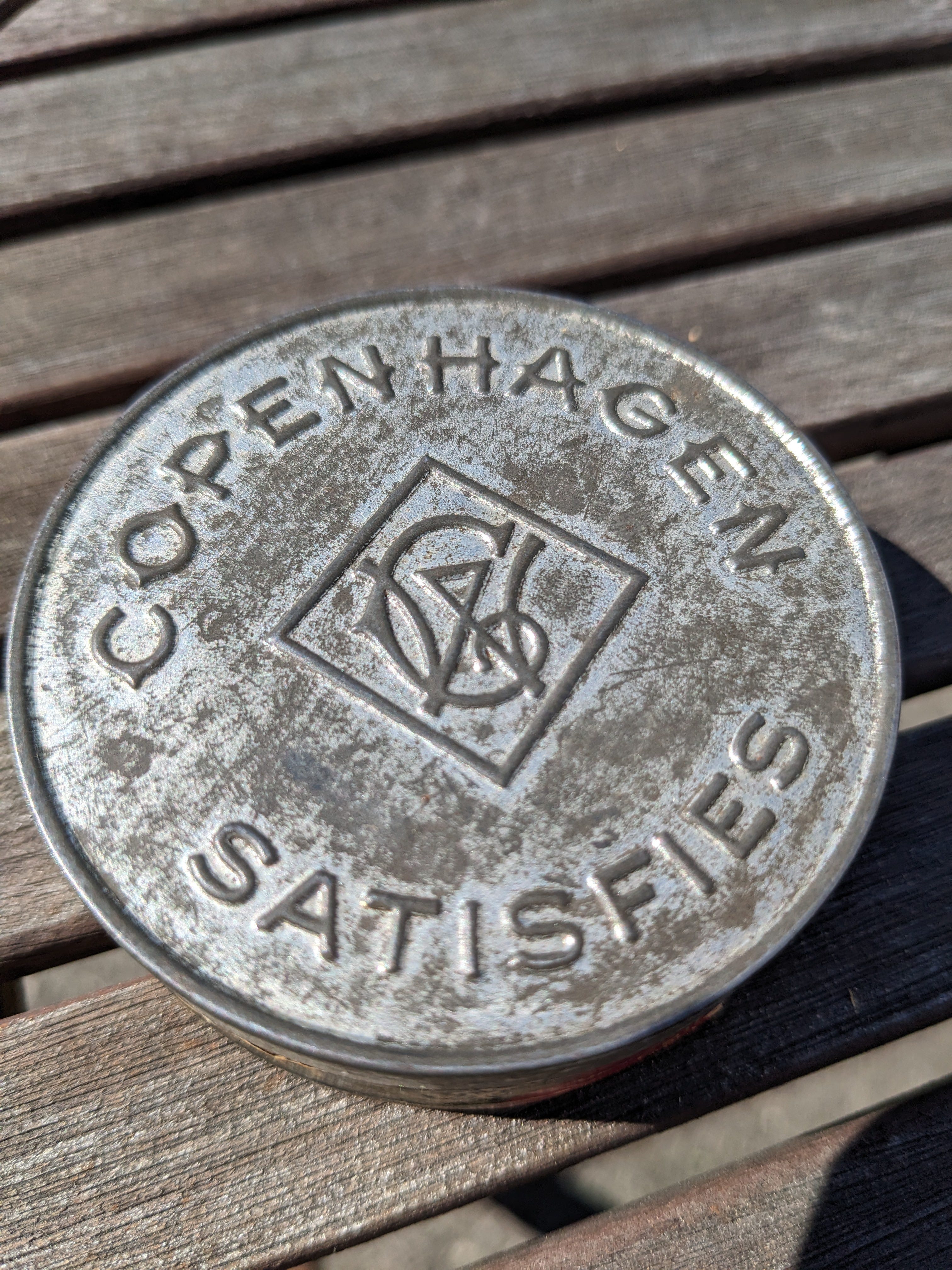
One crossover subject that I write about somewhat frequently is hats. It’s a crossover because hats are an important thing within American Freemasonry. And, hats are one of my odd little quirks. I love the things.
So, I write a lot about them. I’ve written about their use within Freemasonry. I’ve written about what I feel a proper Masonic hat should be. I’ve written reviews of hats up and down the price scale.
And my readers seem to enjoy these posts.
And I know for a fact that these posts have resulted in some sales of the hats I’ve posted about. One guy I know bought two really expensive hats after I posted about them.
So, I guess that could also make me an influencer. Me, an old guy, writes about hats from time to time, and my readers, other old guys, go out and buy a hat from time to time.
The thing is, that means that my little hat posts could be subject to regulation by the federal government. There’s FTC rules that I could be required to follow. These rules have to do with disclosure. I’m required to disclose if I have a relationship with someone who sells hats, or if I got paid to review a hat, or if someone gave me a hat to review. No one’s ever given me a hat to review, no one has ever paid me to review a hat (although if you want to send me some cash, send away,) and I’m not associated with anyone who is in the hat business. So, I’m in the clear. And that seems reasonable to me. If you are a content creator (to use another term of today) and you are getting paid to shill for a product, the moral thing to do is disclose that fact.1
Ah, but, we do live in a time in which far too many people look to the state to solve anything and everything that they perceive to be somehow problematic.
Did you notice that photograph of an awesome old Copenhagen can above? So much cooler than the Copenhagen can of 2024. We all know that Smokeless Tobacco is addictive, government didn’t have to ruin our cool can lids by forcing the Copenhagen people to slap a notice on them.
But, I digress.
Let’s get back on track.
I like Copenhagen. I’ve liked Copenhagen since I was maybe five years old and my grandfather’s neighbor Weldon let me smell his while I was riding in the old farm truck that he was driving through my grandfather’s fields. It has been over fifty years, but I still remember that day perfectly clearly.
I’ve probably used Copenhagen for forty years. I have no desire, nor intention to stop. I like it that much.
I think that it is a fine product, and if you are a cigarette smoker over twenty-one years of age, I’d recommend that you give it a try too.
Why?
Because smoking cigarettes is dangerous as hell, and I believe that harm reduction is a valuable tool for smokers to use in an effort to reduce risk.2
Did you see what I just did there?
I wrote a review of a tobacco product. I was being an influencer again.
But, I’m not in the tobacco business. No one paid me to write what I did. And the Copenhagen people certainly didn’t give me any for free, in fact they’ve sucked tens of thousands of dollars out of me through the decades.
So, I’ve got no trouble with the FTC.
Ah, but that’s the rub.
Because far too many people want to regulate everything to death. Advocating to do so is how they avoid taking any and all personal responsibility.
In January of this year, the New York Times published an editorial by the Director of the News Lab at Harvard University’s Shorenstein Center On Media, Politics, And Public Policy, Emily Dreyfuss.3
Most of her editorial was simply a rant about a nicotine product called Zyn. Zyn is like smokeless tobacco, without the tobacco. Sort of like margarine is to butter. Me, I’ll stick with my Copenhagen and my butter, but apparently lots and lots of folks really like this non tobacco oral nicotine product.
And according to Dreyfuss, they post about it on Tik Tok, and YouTube, and everywhere else in social media land.
Dreyfuss thinks that’s a problem that requires intervention by the federal government. Why? Because she has an eight year old child, and children might see the posts people make online about Zyn. As with all worshipers of the state, Dreyfuss sees herself as a defender of childhood safety.
Down towards the end of the editorial Dreyfuss lays out her Public Policy ideas. Because, she is after all, a Public Policy person from Harvard.
What are they?
-More money of course:
“Government agencies are clearly overwhelmed; they need the resources to enforce the rules already on the books to protect children from exposure to addictive products.”
-A way of getting around the whole unpaid thing. You see, as mentioned above, I don’t get paid when I review a hat, so the FTC rules don’t apply to me. I don’t write my hat posts because someone wants to sell hats and hires me to do so, I write them because I like hats. Likewise Zyn does not pay influencers to help sell their products,4 so the folks talking about Zyn online are doing so simply because they like Zyn. Just like I do because I like hats. And government can’t regulate that. But Dreyfuss thinks it needs to figure out how to do so:
“A recent F.T.C. effort to propose new online privacy safeguards for children addresses ad targeting, but it doesn’t broaden the definition of advertising to encompass unpaid viral influencer content.” -Emphasis mine.
And:
“A separate piece of legislation, the bipartisan Kids Online Safety Act, is awaiting a Senate vote. The bill has decent prospects of passage, but it doesn’t directly address the issue of unpaid influencers” -Emphasis mine.
And:
“I’d go so far as to propose that the courts broaden the definition of advertising to include all influencer promotion.”
Ultimately Dreyfuss would have the courts deem me an advertiser of hats, just because I post about the hats that I buy and enjoy.
It seems rather sad that no one ever bothered to teach Dreyfuss about the First Amendment during her time at Harvard. But don’t worry, she’s not done.
My declaration of myself as an influencer throughout this post is certainly tongue and cheek. I’m certainly not Khaby Lame with eighty million followers.5 I’m just an old guy who writes stuff that other old guys like to read.
-But for purposes of regulation, Dreyfuss certainly would classify me as an influencer, and most likely you as well:
“For a product as dangerous as nicotine, I’d put the bar to be considered an influencer as low as 1,000 followers on a social media account”
So, this post clearly would be subject to regulation by the federal government in Dreyfuss’ perfect world.
Of course nicotine isn’t very dangerous at all.6 The combustion and inhalation of tobacco is. Again, it’s sad that Harvard didn’t teach Dreyfuss that facts are important during her time there.
-But Dreyfuss can’t stop there. What happens, if say, some completely unknown guy has a YouTube account, and he’s got a total subscriber base of three people. Not three thousand people, or three hundred people, three only people.
And this unknown guy makes a video in which he chats about his use of Zyn. He doesn’t follow Dreyfuss’ dreamed of FTC rules because he is 996 subscribers short of her proposed regulatory threshold.
And that video somehow, through the grace of the internet gods, goes viral.
Well, that unknown guy is going to have to be punished. Somehow. Someway:
“maybe if a video from someone with less of a following goes viral under certain legal definitions, it would become influencer promotion.”
The ideas Dreyfuss is promoting are unworkable, contrary to the First Amendment, and unserious.
But, I do have an idea for Dreyfuss to consider, since she writes about her concern for her eight year old son, and what he might encounter online. Indeed that concern seems to be the driver behind all her nonsensical proposals.
Perhaps she will consider it. But doing so would require her to take personal responsibility.
Are you ready?
Here it is…
Tell your eight year old son that he isn’t old enough for Tik Tok, and don’t give him a phone!
See how easy that was?
https://www.ftc.gov/business-guidance/resources/disclosures-101-social-media-influencers
https://rodutobaccotruth.blogspot.com/
https://www.nytimes.com/2024/01/12/opinion/children-nicotine-zyn-social-media.html
https://fox59.com/news/national-world/zyn-nicotine-pouches-are-all-over-tiktok-what-are-they/
https://blog.hootsuite.com/top-influencers/
https://www.echelon.health/nicotine-the-good-the-bad-and-the-ugly/
Bureaucracy intervention hinders our freedom and economic side hustles. Much like a tick or leach, they want to get rich off the hard work and social influence of others by regulating, imposing fees, and taxes. All while not haveing contributed anything positive to society themselves.